What Is an NPDES Permit? The Federal Stormwater and Discharge Authorisation Explained
An NPDES permit authorises a stormwater discharge under the Clean Water Act. See who needs one, who issues it, and screen your site free.
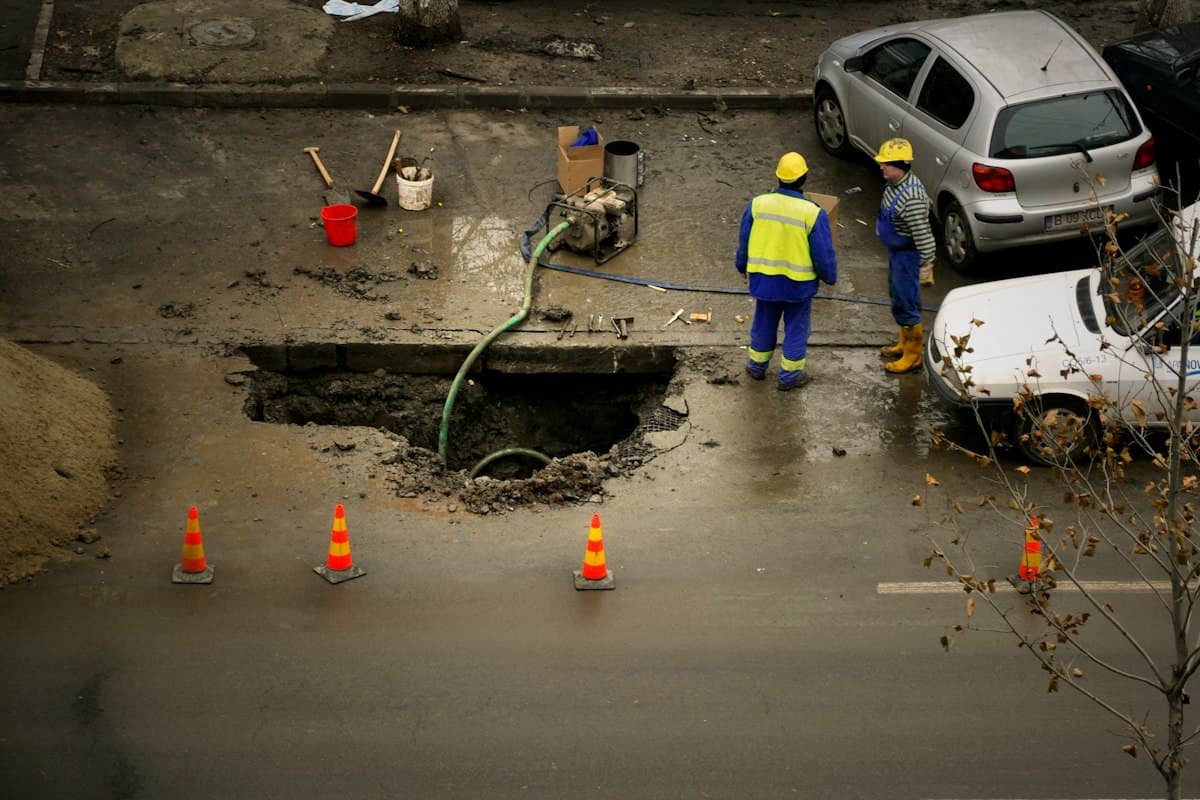
An NPDES permit is the authorisation the Clean Water Act requires before anyone discharges a pollutant from a point source into a water of the United States. For most construction sites, that discharge is stormwater, and the permit is a general one issued either by EPA or by your state's environmental agency, not a bespoke document written just for you. Get the wrong one and every downstream filing, from the Notice of Intent to the inspection log, cites requirements that were never actually yours.
That single sentence carries the whole shape of the programme, but it hides three questions people searching for this term are usually actually asking: does my site need one, who issues it where I am, and what is happening to it right now. All three have concrete answers, and the third one has changed twice in the last seven months.
NPDES, in plain terms
NPDES stands for National Pollutant Discharge Elimination System. It is the permitting programme Congress created in the 1972 Clean Water Act amendments to stop industrial and municipal dischargers from putting pollutants into rivers, lakes, wetlands and coastal waters without anyone tracking what went in, how much, and under what conditions. Before it existed, a discharge either happened or it didn't; there was no federally enforceable middle ground where a facility could discharge lawfully provided it met specific, monitored limits. The permit is that middle ground, and it is why the Act's core prohibition is written the way it is.
The Clean Water Act prohibits anybody from discharging "pollutants" through a "point source" into a "water of the United States" unless they have an NPDES permit.
That line, from EPA's own NPDES Permit Basics page, is worth reading slowly because every word is doing legal work. A "point source" is a discrete, identifiable conveyance, a pipe, a ditch, a channel, a drainage outfall from a construction site, as opposed to diffuse runoff with no single point of origin. A "water of the United States" is the jurisdictional water body the permit protects, the same phrase our own wetland determination guide walks through for the Section 404 side of the Clean Water Act. And "unless they have a permit" means the discharge itself is not illegal; discharging without the paperwork, or outside its terms, is what creates liability.
Construction stormwater is the NPDES trigger builders actually hit
NPDES covers many kinds of discharges: industrial process water, municipal sewage, pesticide application. But the trigger a developer, a contractor or an engineer runs into most often is construction stormwater. Any project disturbing one acre or more of soil, or part of a larger common plan of development or sale that will collectively disturb one acre or more, needs NPDES permit coverage for the stormwater running off that disturbed ground during construction. Rainfall picking up sediment, fuel residue and debris from bare earth and carrying it to a storm drain or a waterway is, in the statute's terms, a point-source discharge of a pollutant, and it needs the same authorisation as a pipe from a factory.
The half-acre site inside a ten-lot subdivision is the trigger that catches the most people off guard: it is the common plan's total disturbance that counts, not your individual lot. Our guide on the one-acre threshold works through exactly this case.
For construction, that coverage almost never arrives as a permit written specifically for your site. It arrives as a general permit, a single document under which many similar operators file a short Notice of Intent rather than negotiate bespoke terms. The document construction people call "the CGP", the Construction General Permit, is that general permit, and its exact identity depends entirely on where the site sits.
Who actually issues your NPDES permit
This is the part generic explainers tend to skip, and it is the part that determines which document you are supposed to be reading. NPDES is a federal programme, but the Clean Water Act lets EPA delegate day-to-day permitting to a state that demonstrates it can run a programme at least as protective as the federal one. Most states have taken that deal. As of this year, 47 states plus one territory are authorised to administer their own NPDES programmes, which means the construction general permit governing your project is, in most of the country, a state-issued document with its own agency, its own permit number and its own text, not EPA's.
EPA remains the direct permitting authority only in the places that haven't taken over the programme: Massachusetts, New Hampshire, New Mexico, the District of Columbia, most US territories, most Indian country, and a short list of federal facilities. Outside that list, filing with EPA instead of your state agency, or vice versa, sends the application nowhere useful. Our Construction General Permit guide sets out the federal-versus-state split in full, with Texas's own TXR150000 permit as the worked example of what a state's version actually looks like next to EPA's.
The status of both permit families right now
NPDES stormwater runs on two separate general-permit tracks that do not move on the same clock, and getting them mixed up is a common and consequential mistake.
| Permit | Covers | Current status | Key date |
|---|---|---|---|
| 2022 Construction General Permit | Active land disturbance, one acre or more | In force; a draft 2027 successor has been proposed | Expires 16 February 2027; comments on the draft close 17 September 2026 |
| 2021 Multi-Sector General Permit | Ongoing industrial activity, 29 sectors | Expired; administratively continued for existing coverage | Expired 28 February 2026; new operators cannot obtain coverage until the 2026 MSGP is finalised |
| Proposed 2027 CGP | Would replace the 2022 CGP | Open for public comment | Published as a draft 3 August 2026 |
The construction side moved first. EPA's 2022 Construction General Permit is due to expire at 11:59pm on 16 February 2027, and on 3 August 2026 EPA published the draft 2027 CGP that would replace it, proposing changes to the permit's water-quality language to align with the Supreme Court's 2025 ruling in *City and County of San Francisco v. EPA*, along with revised rules on submitting the SWPPP itself at the Notice of Intent stage and on stabilising sediment basins. The comment window, originally shorter, was extended and now closes 17 September 2026. Nothing in the draft changes what operators owe under the current 2022 permit today; it changes what a 2027 filing will look like once finalised, and it is exactly the kind of reissuance our own 2027 expiration guide was written to flag before a draft even existed.
The industrial side is already past its deadline. The 2021 Multi-Sector General Permit expired on 28 February 2026. Existing permittees continue under administrative continuance, the standard mechanism that keeps coverage alive while a successor is drafted, so an operator already covered keeps discharging under the same obligations it always had. What administrative continuance does not do is let a new facility or a new operator into the programme: EPA has been explicit that new coverage waits on the 2026 MSGP being finalised. Our MSGP status guide covers what that gap means in practice for anyone trying to file now.
Why the two tracks matter to keep separate
A contractor moving from building a facility to operating it crosses from CGP territory into MSGP territory, and the two permits are not interchangeable paperwork covering the same ground twice. The CGP governs stormwater while the site is under active construction; the MSGP governs stormwater once the finished facility is running as an industrial operation in one of 29 covered sectors. Citing the wrong one, or assuming a filing under one covers the other, is the kind of error that surfaces at an inspection rather than at the application stage, which is the worst possible time to find it.
NPDES permit vs Section 404 permit: two different Clean Water Act programmes
One confusion worth heading off directly: an NPDES permit is not the same thing as a Section 404 permit, even though both sit inside the same Clean Water Act and both get called "the permit" on a jobsite. NPDES, under Section 402, authorises the *discharge of pollutants* from a point source, stormwater, wastewater, process water. Section 404, administered by the US Army Corps of Engineers rather than EPA, authorises the *discharge of dredged or fill material* into a jurisdictional wetland or waterway, the fill dirt for a road crossing a stream, not the runoff from building it. A single project, a road that crosses a wetland and disturbs an acre of upland soil doing it, can trigger both permits at once, from two different agencies, answering two different questions. Screening for one does not clear the other.
How to work out what your site actually needs
The honest starting point is that the answer depends on where the site sits, what it disturbs, and what it discharges to, and that a general statement about NPDES cannot resolve it for a specific address. That's the determination our free screening tool is built to make: it resolves jurisdiction first, checks the acreage and common-plan thresholds, and returns which permit track, and which issuing agency, actually governs before pointing you at requirements. If you're still at the earlier question of whether a plan is required at all, Do I need a SWPPP answers that narrower version directly.
Skipping that order and starting from a generic template is how sites end up with a SWPPP citing the wrong agency's section numbers, or an NOI filed with an authority that was never the permitting authority for that address in the first place. Confirm the jurisdiction, confirm the agency, and only then start writing the plan.
Screen your site and see exactly which NPDES permit track, agency and requirements govern it, with the source cited.
Screen a site freeFAQ
What does NPDES stand for?
National Pollutant Discharge Elimination System, the Clean Water Act permitting programme that authorises discharges of pollutants, including construction and industrial stormwater, from a point source into a water of the United States.
Do I need an NPDES permit for a construction site?
Yes, if the site disturbs one acre or more, or is part of a larger common plan of development or sale that will disturb one acre or more. Coverage almost always comes through a general permit, EPA's or your state's, rather than an individual one.
Who issues NPDES permits, EPA or the state?
Whichever agency has been authorised to run the programme in that location. 47 states plus one territory administer their own NPDES programmes; EPA remains the direct issuer only in the states and areas that have not taken over, including Massachusetts, New Hampshire, New Mexico and the District of Columbia.
Is an NPDES permit the same as a SWPPP?
No. The NPDES permit, most often the Construction General Permit, is the legal authorisation for the discharge. The SWPPP, the Stormwater Pollution Prevention Plan, is the site-specific document required as a condition of that permit, describing the controls, the inspection schedule and the corrective actions.
Is an NPDES permit the same as a Section 404 permit?
No. NPDES, under Clean Water Act Section 402, authorises discharges of pollutants such as stormwater. Section 404, administered separately by the Army Corps of Engineers, authorises discharges of dredged or fill material into a jurisdictional wetland or waterway. A single project can need both.
This guide is general compliance guidance, not legal or engineering advice, and it is not a permit. To see what applies to your own site, use the free screening, or see how the same engine works from your own code or an AI agent.
More guides
Put this into practice on your own site
Screen a site free in your browser, or read the permit that governs your state.